
On 19th November 2025, Young Citizens launched The Big Democracy Lesson: a new national programme giving state schools free classroom resources to build democratic confidence and civic participation from primary age through to Year 13.
The Big Democracy Lesson is calling on teachers to deliver at least one lesson on democracy this year, with secondary school resources available this term and a primary–age suite launching in March 2026.
The campaign kicked off with an evening featuring former Downing Street advisor and strategist turned author and podcaster Alastair Campbell in conversation with young people.
They discussed their views on the state of democracy, the support they need to participate and how we rebuild optimism for their generation in a fractured information and political landscape.
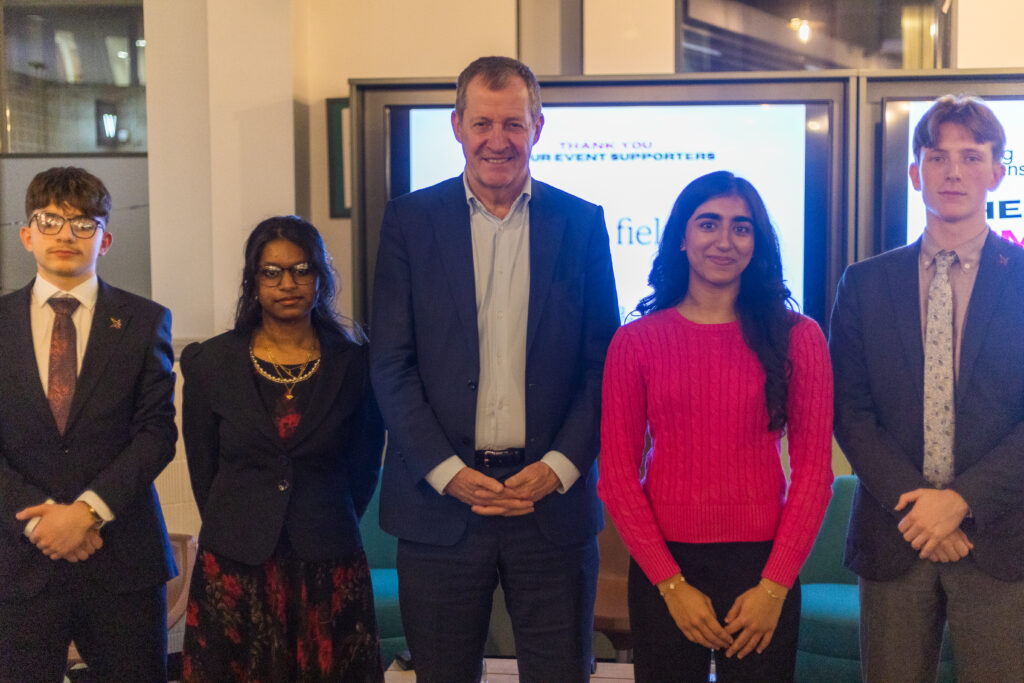
Alastair Campbell hosts the panel discussion at the International Dispute Resolution Centre
Campbell said: “We need to ask ourselves why many young people are distrustful of or disengaging from institutional democracy, often favouring the false promises of autocratic strongmen. Populism, polarisation and post-truth are driving this change.
“We need to engage young people with democratic values early, in classrooms, not just at election time. Civic literacy, oracy and critical thinking must be core to our curriculum. It’s not just about preparing them to vote. It’s about schools being a catalyst for social action.”
“We can’t allow the onslaught of misinformation and culture wars to knock young people off track. I can’t wait to see the positive effects of The Big Democracy Lesson across the UK.”
Watch Alastair Campbell’s message for young people on why politics matters and how civic education supports our democracy.
The Attorney General, Lord Hermer KC, also spoke at the event in support of citizenship education and the introduction of votes at 16.
Speaking directly to the young people at the event, Hermer said: “It’s really important that politicians take account of your priorities. The decisions that we make now on issues such as climate change and AI will be profoundly important for the world you will grow into. That is why it’s really positive that you are empowered by having the vote.”
“We need to engage with people about democracy, rights and the rule of law. It’s an absolutely essential conversation for us to be having.”
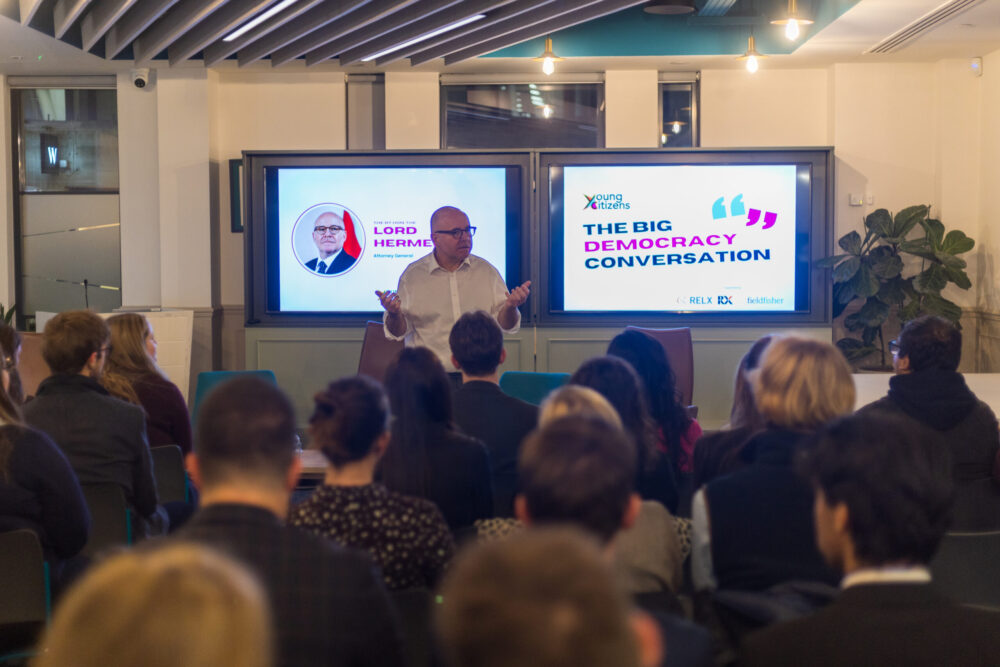
Attorney General, Lord Hermer KC, addresses the young people in the audience
What did the young people think?
The panel consisted of young people aged 16 to 19, including Tajus from Harris Academy Wimbledon, Shad and Lydia from Sirius Academy Hull, and Iman Mansoor, a squad leader at the youth empowerment organisation My Life My Say.
“I think that [democratic education] is overlooked,” Lydia said. “I am told that we had a Citizenship lesson in year 10, but I cannot remember having it, and I think that speaks volumes. Politics is touched upon, but then discarded. Schools focus more on teaching English and Maths because that is what they are judged upon.”
“I think it’s very important that young people engage politically as they are our future decision makers. By engaging [young people] now, they can help shape policies and it enables our voices to get heard.”
Iman Mansoor, My Life My Say
The young people were divided on their support of lowering the voting age, with those against citing a lack of critical thinking skills and media literacy education amongst 16- and 17-year-olds.
Tajus expressed concern that “16-year-old minds can be very easily altered, especially through social media. Instagram and TikTok create social bubbles, which lead to radicalisation and influence by other people’s opinions. Your choices need to be based on your opinions and not the opinions of others.”
“Speaking for many people, I can say that we get most of our information from social media, but it can be misleading. I believe that we should be educated more about these things, but currently we are not.”
Shad, Sirius Academy Hull
“The Big Democracy Lesson is a great opportunity for young people to speak with their peers and teachers in classrooms.” Iman said. “These political discussions mean that many of the effects of radicalisation won’t happen.”
When asked about the biggest issues that matter to them, the panellists mentioned honesty from politicians, loss of unity in society, the cost of living and climate change.
[Follow us on LinkedIn and Instagram, where we will be publishing more interviews with young people alongside updates on all our campaigns, resources and programmes].
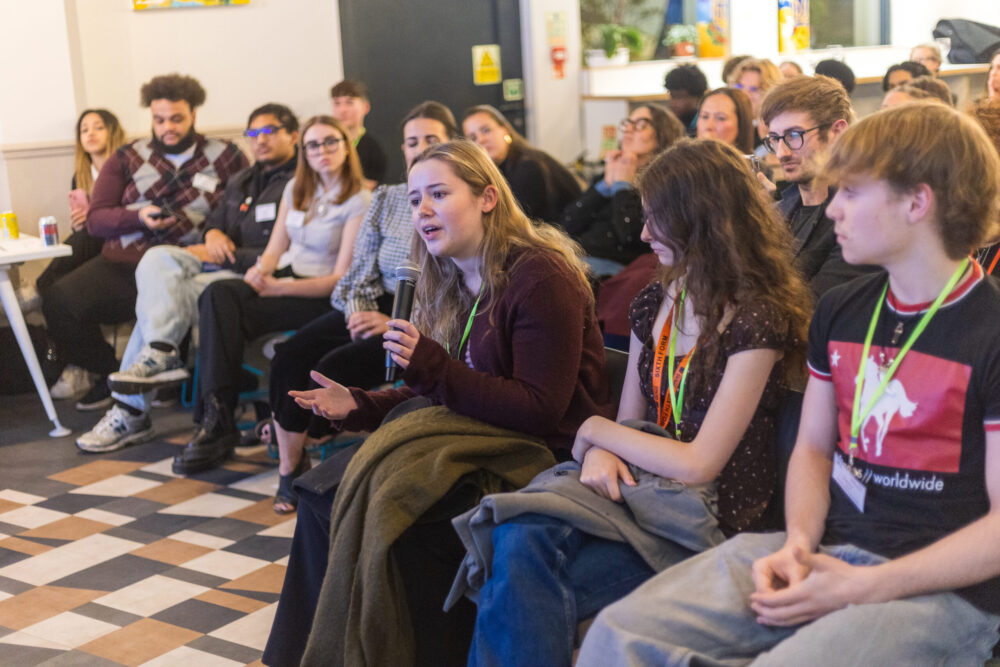
Students ask questions of the panel during the Q&A session
Why now?
The launch comes as major changes to democratic participation take shape. Following the Government’s Curriculum & Assessment Review, Citizenship will become statutory for primary schools (ages 5 to 11) in 2028, in line with current secondary school guidance.
Alongside this, Votes at 16 will apply at the next General Election, meaning many pupils currently in Year 6 will vote for the first time – yet most have had no formal preparation for democratic participation. Teachers are signalling the need for support, with growing demand for resources that help their students discuss political issues safely, confidently and without polarisation.
Recent studies have also shown that young people are sceptical about our current political system. The IP-PAD Youth Survey (2024) found that 49% of 16-21-year-olds are dissatisfied with how democracy works in the UK, with younger people aged 16 to 18 the most dissatisfied. In a survey by Channel 4, 52% of Gen Z said they would prefer “strong leaders who don’t need to be elected”, while one-third (33%) believed “the UK would be a be a better place if the army was in charge”.
However, a recent study of 16-year-olds by DEMOS painted a brighter picture, with 72.8% of young people agreeing that “we must defend democracy at all costs because it is the best way of running society”.
Despite their distrust in politics, most young people still believe in democratic values. But without early teaching and practice, young people risk entering adult life without the civic confidence, critical literacy or trust needed to participate meaningfully.
The Big Democracy Lesson addresses this gap by providing ready-to-use lessons, assemblies and discussion activities that introduce the building blocks of democratic participation. It offers a practical, trusted starting point for teachers to build civic confidence consistently across year groups, establishing the foundations for meaningful participation long before a young person enters a polling booth.
The new annual programme builds on the success of The Big Legal Lesson, taking place each February, which has reached over half a million young people since launching in 2019, with 94% of teachers reporting increased confidence teaching the rule of law.
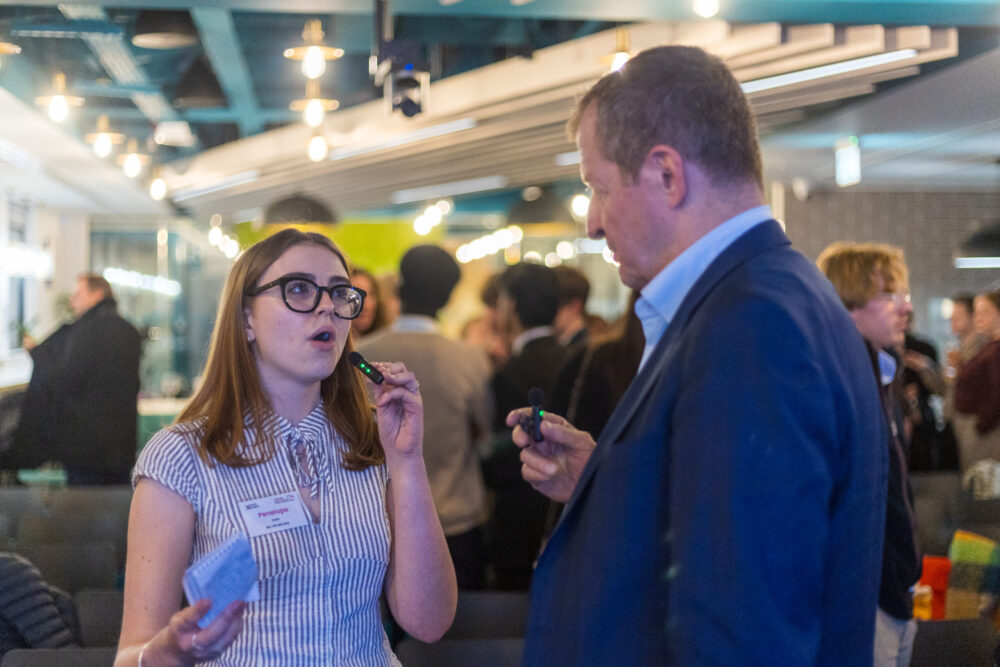
Penelope, a My Life My Say squad leader, interviews Alastair Campbell
The need or civic skills development
Ashley Hodges, Chief Executive of Young Citizens, said: “Votes at 16 is a milestone, but a vote only matters if young people feel confident using it and creates a life-long sense of a say and stake in society.
“Democratic participation doesn’t begin at the ballot box; it begins years earlier, with understanding power, practising debate, learning to disagree well, and knowing how to find reliable information in a world of misinformation.”
Ashley Hodges, Chief Executive, Young Citizens
“Right now, too many young people are being asked to step into democracy without the preparation they deserve. The Big Democracy Lesson is about building that foundation for every young person, not just those already engaged or politically switched on. If we want a generation who trusts institutions, feels they have a stake in society, and knows how to shape change – this is where it starts: before the ballot box, in every classroom.”
Our new president Lord Knight of Weymouth closed out the launch event, lending his support to our mission to see that all young people have access to inspiring, quality and skills-focused democratic learning before they leave school.
“Democracy is all about people power, but many young people still feel powerless”, Lord Knight said. “It’s our job as educators and policy makers to give them a voice, break down barriers to engagement and show them how to be active citizens.
“We need to deliver civic skills development from primary school and onwards.”
Lord Knight of Wymouth, President, Young Citizens
“Coupled with the right enrichment opportunities, I believe this can break the spell of youth disenchantment and distrust in our political system. It will also demonstrate the value of community spirit and social action, with schools acting as hubs for local citizenship.
“The Government’s recent commitment to mandatory Citizenship education in primary schools is a great start, but teachers will need extra support to make it a success. That’s why organisations like Young Citizens and their campaign The Big Democracy Lesson are so important.”
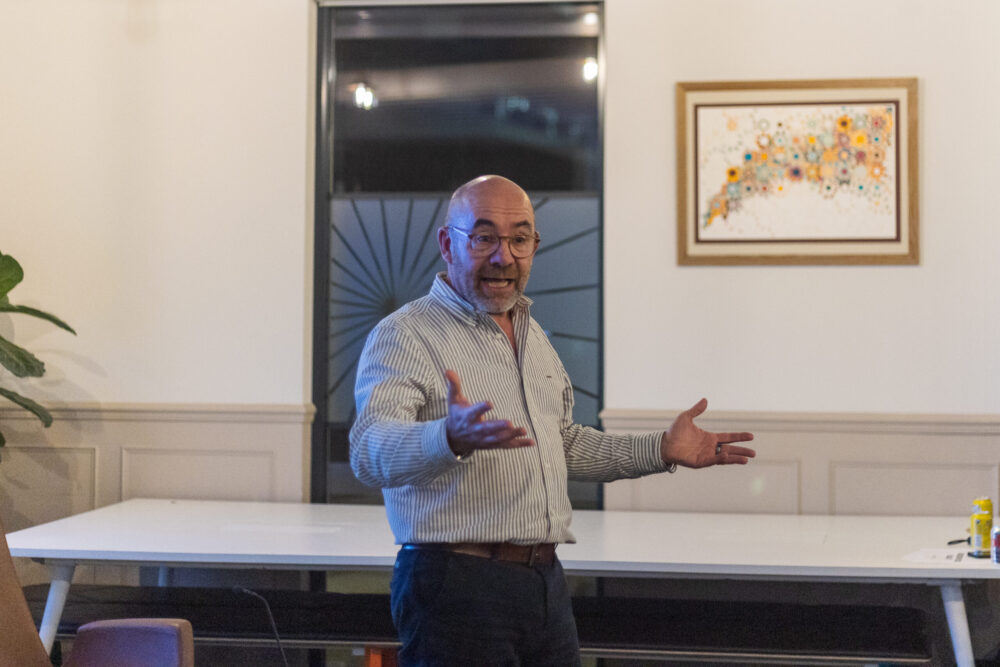
Lord Jim Knight of Weymouth made a closing speech calling for more civic skills education
Join the campaign
Now is the time to give young people the skills, knowledge and confidence to be active citizens – both before and beyond the ballot box. We’re inviting secondary schools to deliver at least one lesson on democracy this year. Sign up for the free resources.
About Young Citizens
Founded in 1989 by Lord Phillips OBE, Young Citizens helps state schools deliver active citizenship education so young people are equipped with critical knowledge and skills on our democracy, law, media and the economy to participate in their communities and society. Each year, the charity reaches over 300,000 young people across thousands of UK schools through its lessons, training and immersive experiences including Mock Trials, youth-led social action Make a Difference Challenge and The Big Legal Lesson.
Acknowledgements
Thank you to our campaign supporters RELX/RX and Fieldfisher, and the International Dispute Resolution Centre for hosting the event.